
A commercial termite treatment is a much bigger undertaking when you’re working inside a massive warehouse. Unlike a typical residential job, large commercial properties require careful planning, specialized equipment, and attention to areas that aren’t always easy to access.
Blue Duck Pest Control recently completed a major liquid termite treatment project inside a large warehouse facility. The photos from the job show the extensive interior perimeter, the equipment used, and the preparation involved in completing work on this scale.
For commercial property owners in Indianapolis and throughout Central Indiana, this project offers a closer look at what goes into professional termite control and why understanding the recommended treatment matters before making a significant investment.
What Makes a Commercial Termite Treatment Different?
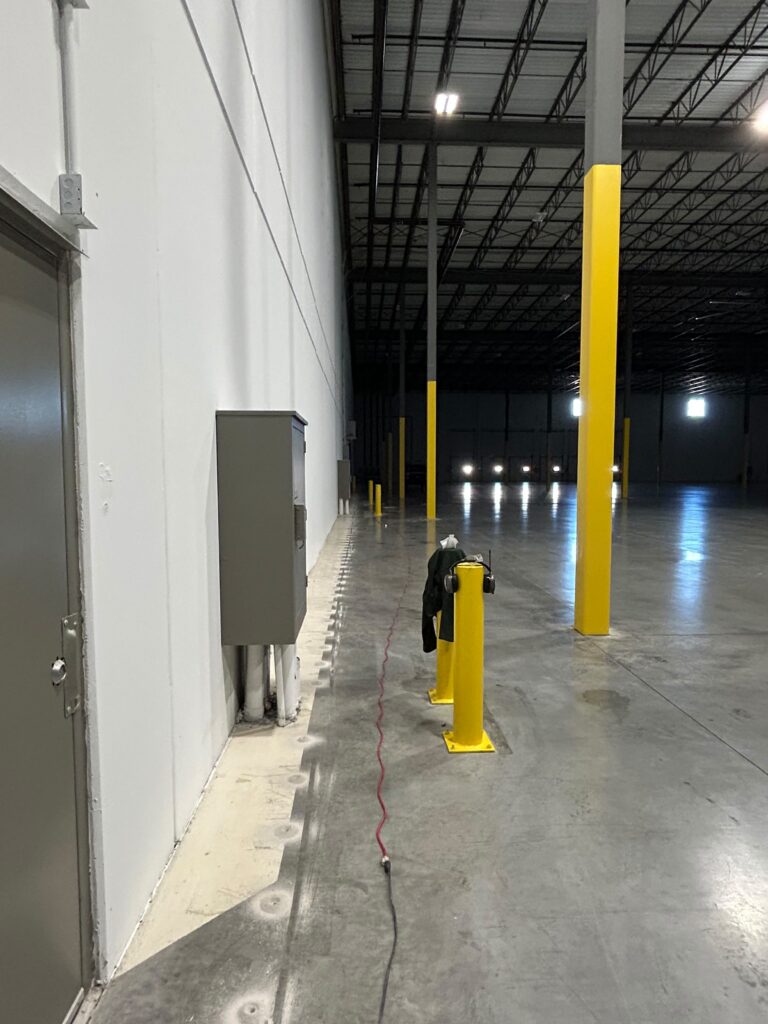
Take a look at the size of the warehouse in these photos.
The building has high ceilings, long interior walls, concrete floors, and multiple structural features that must be considered when planning treatment.
Unlike a typical residential property, a large commercial building may require technicians to work across extensive foundation areas and around operational equipment.
Even when much of the structure is concrete and steel, termites can still threaten susceptible wood materials and other building components.
The challenge isn’t simply treating a bigger space. It’s determining where treatment is needed and how to complete the work properly.
A Closer Look at Blue Duck’s Completed Liquid Termite Job
The photos show several stages and details associated with the recently completed project.
1. Working Along the Warehouse Perimeter
One of the most noticeable features is the long stretch of interior wall running alongside the concrete floor.
Foundation perimeters and wall-to-floor junctions are important areas to evaluate during termite treatment planning.
Subterranean termites live in soil and can travel through concealed pathways to reach suitable materials inside buildings.
Depending on the construction and treatment plan, technicians may need to access soil beneath or alongside concrete to establish a treated zone.
The photos show work concentrated along the warehouse’s interior perimeter, where access and treatment planning are particularly important.
2. Equipment Used for Liquid Termite Treatment
Another photo shows equipment positioned near the wall, including a hose connected to a metal application tool.
Large liquid termite projects can require specialized equipment to deliver termiticide into designated treatment areas.
The exact application method depends on the building’s construction, accessible soil, product label, and treatment specifications.
Proper equipment and careful application matter because liquid termite treatment is intended to address termite movement through treated soil.
Simply applying a product to visible concrete surfaces isn’t the same as establishing an appropriate subsurface treatment zone.
3. Preparing and Accessing the Concrete Perimeter

The third photo shows tools and work materials arranged along the edge of the warehouse floor.
Concrete slabs can complicate termite treatment because the soil beneath them isn’t directly accessible.
In some commercial applications, technicians may need to drill through concrete at specified locations to reach the underlying soil.
That work requires careful planning, especially around utilities, structural components, and building operations.
After treatment, access points should be finished appropriately according to the work plan.
These details help explain why commercial termite projects require more than simply arriving with a sprayer.
Why Liquid Termite Treatment Requires Careful Planning
A large warehouse can contain thousands of square feet of floor space, but that doesn’t mean every square foot receives the same treatment.
Treatment requirements depend on the building design, the target pest, the location of potential termite entry points, and the approved application method.
Before work begins, a professional should consider:
- Foundation layout and accessible treatment areas
- Concrete slabs and expansion joints
- Plumbing and utility penetrations
- Potential termite entry routes
- Product label requirements and application specifications
- Safety considerations for people working in the facility
For occupied commercial properties, scheduling and access are also important.
The objective is to complete the necessary work while minimizing avoidable disruption to the business.
Does Every Commercial Property Need Extensive Termite Treatment?
Not necessarily.
And this is where asking the right questions becomes important.
A property owner might receive a proposal for a major liquid termite treatment without fully understanding why that approach was recommended.
In some situations, a comprehensive treatment may be justified by confirmed termite activity, building conditions, or the need for a particular protection strategy.
In others, further inspection or a different treatment approach may be worth discussing.
Before approving a large commercial termite project, ask the provider to explain the inspection findings, treatment areas, proposed method, and expected follow-up.
A detailed proposal should help you understand what you’re purchasing.
Why a Second Opinion Matters for Commercial Termite Control
Commercial termite treatments can represent a significant property maintenance expense.
If you’ve received a substantial quote, getting a second professional opinion can help you evaluate whether the proposed scope is appropriate.
That doesn’t mean choosing the lowest bidder.
It means understanding whether the company has identified the problem, considered the building’s construction, and recommended a treatment plan supported by its findings.
At Blue Duck Pest Control, we believe commercial property owners should feel comfortable asking those questions.
As the Home of the Second Pest Opinion, we want customers to understand their options before committing to major pest control work.
Commercial Termite Treatment in Indianapolis and Central Indiana
Warehouses, distribution centers, office buildings, and other commercial properties throughout Central Indiana have different construction features and pest management needs.
A large warehouse may require a different termite treatment strategy than a small office building or retail property.
That’s why the inspection and treatment plan should be specific to the building.
The recently completed project shown in these photos highlights the physical scale of commercial termite work and the importance of having the right equipment and approach.
It also serves as a reminder that termite protection isn’t always something property owners can evaluate by looking at the surface.
Much of the important work may take place beneath concrete or around concealed foundation areas.
Need a Second Opinion on a Commercial Termite Treatment?
If your business has received a termite treatment proposal that seems unusually expensive or difficult to understand, you don’t have to make a decision without asking more questions.
Blue Duck Pest Control helps commercial property owners throughout Indianapolis and surrounding Central Indiana communities evaluate pest concerns and understand professional treatment recommendations.
Whether you’re reviewing a proposed liquid termite treatment or considering a different pest control provider, we’re here to offer another perspective.
Before committing to a major termite treatment, make sure you understand what your property actually needs.
Contact Blue Duck Pest Control to discuss a commercial termite inspection or request a second pest opinion.
Blue Duck Pest Control
Home of the Second Pest Opinion
We Evict Unwanted Guests.