
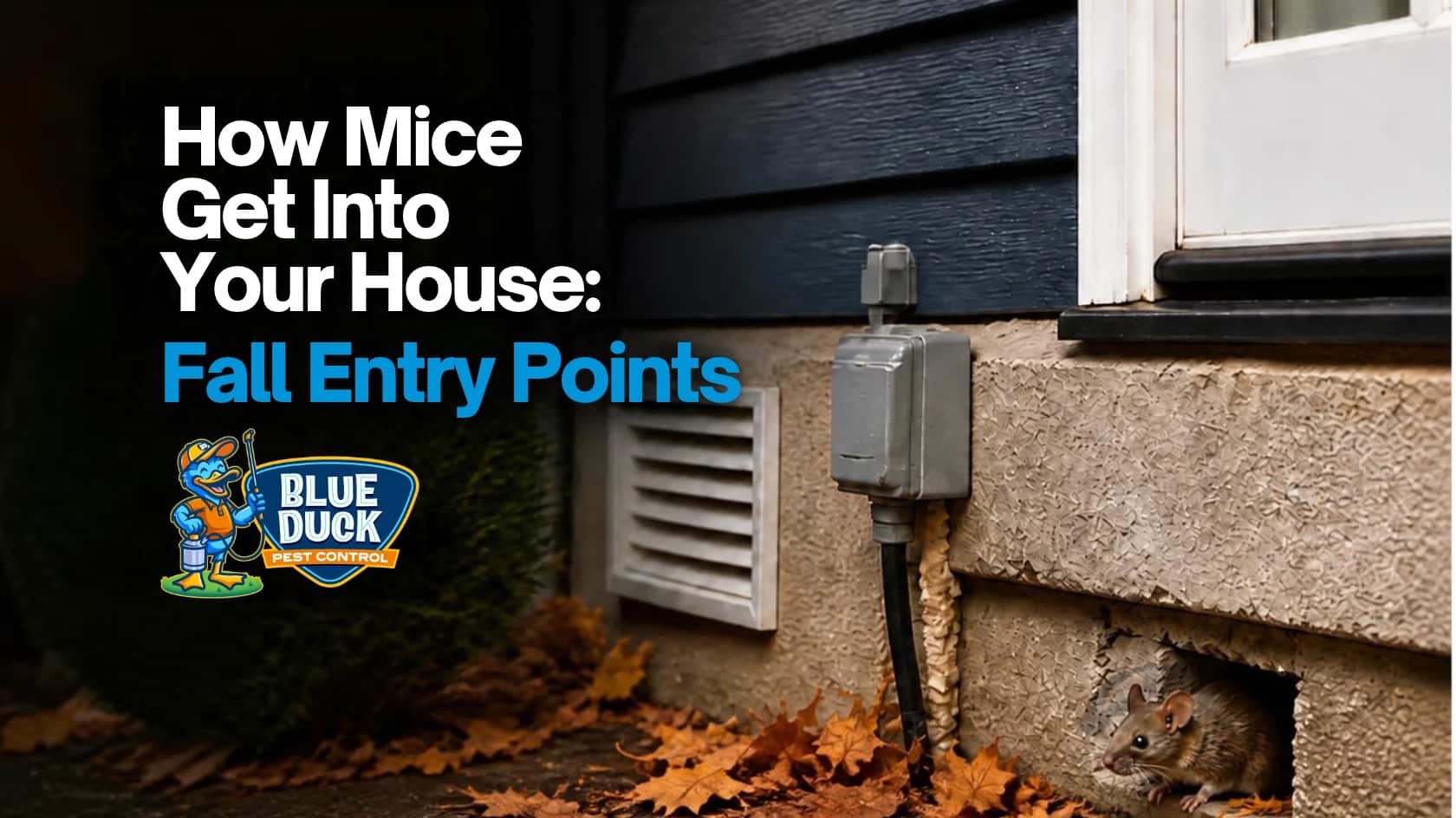

You keep the doors closed. Your windows have screens. So, how do mice get into your house in the first place? For homeowners in Carmel and Noblesville, the answer can be a tiny opening that is easy to overlook. Mice can use small gaps around a home’s exterior to reach warmer, protected spaces. Fall is a smart time to find those weak spots before colder Central Indiana weather settles in.
How Mice Get Into Your House Through Small Openings
Mice are surprisingly good at finding ways inside.
According to Purdue Extension, mice can enter through openings as small as 1/4 inch. That means a gap that looks insignificant to you may be large enough for a mouse.
Once inside, mice can find shelter in walls, attics, basements, garages, and other quiet spaces.
The first step toward prevention is knowing where to look.
1. How Mice Get Into Your House Around Doors
Exterior doors are one of the easiest places to inspect.
Look at the bottom and sides of each door. Worn weather stripping can leave small gaps.
Garage doors deserve extra attention. Check the seal along the bottom. Also inspect the corners where the door meets the frame.
If you can see daylight through a closed exterior door, investigate the gap.
2. Gaps Around Pipes and Utility Lines
Your home needs openings for plumbing, electrical wiring, cable lines, and other utilities.
Those openings are not always perfectly sealed.
Walk around your Carmel or Noblesville home and locate every place where a pipe or utility line enters the structure. Look for visible gaps around each penetration.
Pay particular attention to areas near ground level.
A small opening can become a convenient access point for rodents.
3. Foundation Cracks and Exterior Gaps
Foundation areas should be part of your fall inspection.
Look for cracks and gaps where different building materials meet. Check around additions, steps, patios, and other areas connected to the house.
Not every crack indicates a mouse entry point. However, visible openings should not be ignored.
Properly sealing accessible gaps can make your home less inviting to rodents.
Where Else to Check for How Mice Get Into Your House
Do not stop your inspection at ground level.
Mice are capable climbers. That means potential access points higher on your home also deserve attention.
Inspect:
- Exterior vents
- Roofline gaps
- Soffits and fascia
- Openings around siding
- Attic vents
- Areas around the chimney
- Damaged screens
Some of these locations can be difficult or unsafe to inspect yourself. A professional can evaluate hard-to-reach areas when needed.
4. Attached Garages
An attached garage can provide mice with a more protected route toward your living space.
Garages also tend to contain plenty of hiding places.
Cardboard boxes, grass seed, birdseed, and pet food can attract rodent attention. Once a mouse enters the garage, additional gaps may provide access to the rest of the home.
Keep food products in sturdy sealed containers. Reduce unnecessary clutter near walls.
Then check the door between your garage and house for gaps.
5. Basement and Crawl Space Openings
Basements and crawl spaces can have several potential entry points.
Inspect windows, vents, utility penetrations, and exterior access doors.
Moisture can also damage building materials over time. This can create new openings around older seals or exterior components.
Carmel and Noblesville homeowners should include these lower areas during a fall exterior inspection.
Why Fall Makes Mouse Entry More Noticeable
Mice can be present around homes throughout the year.
Fall makes indoor shelter increasingly attractive. Your home offers protection from changing outdoor conditions. It can also provide access to food and nesting materials.
That is why prevention should begin before you hear scratching inside a wall.
A few minutes spent checking doors, utility lines, and exterior gaps can reveal potential problems early.
What to Do if Mice Are Already Inside
Sealing entry points is important, but the situation changes once mice are already indoors.
Look for common signs of activity. These can include droppings, gnaw marks, shredded nesting material, or nighttime scratching sounds.
Also check kitchens, pantries, garages, basements, and attics.
Avoid assuming that catching one mouse has solved the entire problem. There may be additional activity elsewhere in the home.
Professional Help With How Mice Get Into Your House
Finding a mouse is one thing. Finding its entry point can be much harder.
Blue Duck Pest Control can help homeowners identify signs of rodent activity and potential access points around the property. A professional inspection can be especially useful when mice keep returning despite your prevention efforts.
The goal is to understand how rodents are using the property rather than only reacting to the mouse you happened to see.
Keep Mice Out of Your Carmel or Noblesville Home
Fall is the right time to take a closer look at your home’s exterior.
Check door seals. Inspect utility openings. Look around the foundation. Do not forget the garage, basement, crawl space, and roofline.
If you are already finding signs of mice, Blue Duck Pest Control can help.
Our local team serves homeowners in Carmel, Noblesville, Indianapolis, and surrounding Central Indiana communities.
Contact Blue Duck Pest Control today to schedule service and get help protecting your home from unwanted rodents this fall.